What is an abortion shield provider?

What is an abortion shield law?
As some states have banned abortion, others have passed abortion shield laws to protect doctors who mail abortion pills, provide telehealth care, or assist people traveling across state lines for an abortion. Shield laws aim to create a “safe haven” for abortion care and to limit the reach of anti-abortion states into those jurisdictions.
You can view a list of states that have shield laws here.
As short-hand, we often refer to the medical professionals operating from a state with a shield law as “shield providers.”

Can you still get abortion pills by mail from shield states?
Yes! When it comes to abortion pills by mail, providers operating under shield laws are sometimes called shield providers or online providers. The language is always changing, but for now, these are companies that legally prescribe or ship abortion pills from shield states to people living in states where abortion is banned or restricted. So, even if you live in Texas, Louisiana, or Mississippi, you can still have pills mailed to you — compare the different ways to get pills here.
As of July 2026, there are 8 shield providers in the U.S. Many offer discounts or even free services:
- A Safe Choice — through 13 weeks | Serves all 50 states + U.S. Territories | $150
Get more info - Abuzz — through 12 weeks 6 days | Serves all 50 states + U.S. Territories | $145, financial assistance is available
Get more info - Aid Access — through 13 weeks 6 days | Serves all 50 states | $0 - 150, financial assistance is available
Get more info - Choices Rising — through 12 weeks | Serves all 50 states + Puerto Rico | $5 - 150, financial assistance is available
Get more info - Her Safe Harbor — through 12 weeks | Serves all 50 states + Puerto Rico | $150
Get more info - Southern Woven — through 12 weeks 6 days | Serves all 50 states + Puerto Rico | $0 - 145, sliding scale is available
Get more info - The MAP (Cambridge Reproductive Health Consultants) — through 11 weeks | Serves all 50 states + U.S. Territories | $5 - 150, pay-what-you-can is available
Get more info - We Take Care of Us — through 13 weeks | Serves all 50 states + Puerto Rico | $5 - $300, financial assistance is available
Get more info
While self managing an abortion is not a crime before 24 weeks in any state, what the law says and what happens in reality can be different. Ordering pills online may come with legal risk.
If you have any questions or want to talk about risks specific to you and your life, you can call the Repro Legal Helpline at 844-868-2812 to talk with a lawyer.

What happens if a provider sends pills to a banned state like Texas? I heard they banned pills by mail?
In December 2025, a new law will take effect in Texas that allows private citizens to sue health providers who prescribe, mail, or give abortion medication to patients in Texas. However, this law does not criminalize or penalize the pregnant person, so it doesn’t increase someone’s legal risk—only the legal risk of the provider.
We expect to see more laws like this in other anti-abortion states. We also expect to see continued legal challenges of shield laws.
If you have any questions or want to talk about risks specific to you and your life, you can call the Repro Legal Helpline at 844-868-2812 to talk with a lawyer.
And remember that abortion pills are available in all 50 states and the U.S. territories — search your options at ineedana.com/search
Where can I stay when traveling for an abortion?
So, you’ve used ineedana.com/search, compared the different ways to get abortion pills by mail, and decided that traveling is the best option for you. That’s great!
The next big question is: where will you stay?
We spoke with the expert advocates at abortion funds to compare low-cost lodging options. Here’s a breakdown of what you can expect, with tips to help you find the choice that’s most supportive and affordable for you.
This first table gives you a quick snapshot. Below, you’ll find more details for each option.
Overview of lodging options
Cost
Availability
Best for
Hotels/Motels
$$$ *Abortion funds may be able to help!
Widely available
Predictable, near clinics, 24/7 staff
Short-Term Rentals (Airbnb, Vrbo)
$$–$$$
Most cities
Longer stays, cooking, kids
Friends/Family
Free
Where you have connections
Emotional support, no cost
What's the best lodging option for my needs?
It depends on your budget and what makes you feel most comfortable. Things like privacy, layout, and check-in flexibility can also make a big difference. We’ve highlighted what may or may not work for each option.

Hotels
Why it might work
- Predictable quality, especially with hotel chains
- Often located close to clinics
- Private rooms and bathrooms
- Staff is usually available 24/7
- May have a shuttle between the hotel + airport
What to keep in mind
- Can be expensive, with hidden fees and deposits
- A valid (not expired) ID is required
- Most hotels require you to be 21+ to book; most motels allow 18+
- May be harder to manage with kids
- Some “required” hotels set by clinics may not be affordable
- Shows up on your credit card statement (can be an issue if you need to keep this private)
Helpful tips
- Motels are usually cheaper but simpler — the number of stars often shows how nice (and how pricey) it is
- Ask the clinic if they know of hotels with discounts
- Ask the clinic if they require you to stay at a certain hotel or within a certain distance
- Ask the hotel if they have a continental or free breakfast

Short-Term Rentals (Airbnb, Vrbo)
Why it might work
- Feels more like home
- Kitchens make it cheaper to cook your own food
- Sometimes cheaper than hotels
- Good for traveling with kids
What to keep in mind
- Cancellation fees can be high
- Extra fees (cleaning, service, etc.) add up
- Some rentals share spaces with hosts, which may feel unsafe
- Must be 18+ to book
- Shows up on your credit card statement (can be an issue if you need to keep this private)
Helpful tips
- When booking, choose “entire place” for more privacy
- Look for listings with lockboxes or coded entry for contactless check-in (helpful if someone else books for you)

Staying with Friends or Family
Why it might work
- Free
- Emotional support from someone you trust
- Flexible and comfortable environment
- May be able to help with meals, rides, or childcare
What to keep in mind
- You may have to share why you’re traveling
- Risk of judgment if they don’t support abortion
- Less privacy if that’s what you want
- Not everyone has friends/family near a clinic
Helpful tips
- You don’t have to disclose you’re having an abortion — you can say you’re in town for a “medical procedure” or that you’ll be busy during the day
- Plan privacy ahead of time (e.g., set boundaries for rest, quiet, or alone time)
- Use our miscarriage fact sheet if you need language to explain possible symptoms (abortion and miscarriage often look the same)
- Confirm logistics like clinic distance, transportation, and timing

What if I need help paying for lodging?
Abortion funds and support organizations exist to help cover the many costs that can come up when you need an abortion. Some focus on paying for the procedure itself, while others can step in with support for travel, lodging, child care, or even meals. If paying for a place to stay is what’s standing in the way, there are support organizations that can help make your trip possible.
What they offer
- Cover hotels, travel, childcare, and procedure costs (depending on organization)
- Abortion-positive and supportive staff
- Experienced in handling travel logistics
- Often collaborate with other funds to cover full costs
- Translation services for non-English speakers
- Work closely with clinics to help manage appointment details and logistics
What to know
- Limited capacity, may not cover all expenses
- May not be available everywhere
- Less control over where you stay or preferences
- Coordination can take time
How to get help
- Contact them as soon as your clinic appointment is set
- Ask if they have vetted hotels or volunteer homes
- They can sometimes book hotels for you without an ID
- Ask about local transportation, meal help, or other travel support
Below are the support organizations that offer help with lodging and other practical support services. You can also find your local fund here (be sure to filter by “logistical support”).

What is Gloria, and how does it help with abortion travel?
Gloria is a non-profit that connects abortion seekers traveling to Colorado and New Mexico with free lodging in private spaces like Airbnbs, guesthouses, or casitas — separate units where you’ll have your own entrance and privacy.
You’ll get the benefits of an Airbnb stay—like access to a kitchen and a comfortable, home-like space—without having to coordinate anything yourself. Gloria arranges all of the accommodations, so you can worry about one less thing.
What to expect
- Abortion-positive and supportive
- Hosts are carefully screened for safety and trustworthiness, but patients and hosts typically never meet in person
- Private entrance, bathroom, and bedroom guaranteed
- No name or ID required; data is deleted after the stay
- Works with local abortion funds to help with local travel
Things to keep in mind
- Limited to certain locations (New Mexico + Colorado)
- Availability depends on donated units, so it’s not as instant as booking a hotel. Reaching out early increases options.
- Not able to support minors traveling alone
- Not able to support non English speakers right now
- Communication happens through the encrypted messaging app Signal (you’ll need a phone number) but they help you with setup which is quick and easy
How to get help
- Have your clinic appointment details ready — lodging is based on the clinic’s location
- If you want to be sure the space feels private, ask about things like doorbell or outdoor cameras before confirming.
- Flexible check-in and check-out times mean you can avoid sitting around at the airport — whether that’s arriving early to settle in or leaving late to line up with your flight.
You can contact Gloria by filling out this form.

Traveling for an abortion can be stressful, but you don’t have to handle every detail on your own. Abortion funds and organizations like Gloria exist because they understand the logistical challenges of getting care and believe you deserve safe, affordable support. You can explore all your options at ineedana.com.
Can I breastfeed during or after an abortion or miscarriage?
Short answer - yes!
You can safely breastfeed your child before, during, or after any type of abortion. And it’s also ok to breastfeed during a miscarriage since it’s usually treated with the same medications and procedures as abortions so, it makes sense to have the same questions (and the same reassurances) about breastfeeding.
Caring for and even breastfeeding a child when someone needs an abortion or experiences a miscarriage are very common. In fact, a majority of people who have abortions are already parents. According to 2022 data from the Center for Disease Control + Prevention, 6 out of 10 people who have abortions are already parents and half of them have two or more children.
“Parents show their love in countless ways. Ending a pregnancy should not interfere with your ability to feed and nourish your baby or older child in the way you choose, and that includes breastfeeding throughout the abortion or miscarriage process in nearly all cases.”
- Dr. Caitlin Weber - family medicine doctor, abortion provider, and IBCLC

Quick facts:
- Breastfeeding does not change how the abortion pills are absorbed or how well they work.
- If you’re alert enough to safely hold your baby, you’re safe to breastfeed.
- You don’t need to pump + dump unless:
- If you have an ectopic pregnancy and are given methotrexate — pump and dump for 24 hours
- If given codeine or tramadol for pain — pump and dump for 24 hours. It is also ok to ask what medications you are being prescribed and ask if there are any other options.
If you’re unsure, call (833) 246-2632 to talk with a doctor at the Miscarriage + Abortion Hotline.

How does a medication abortion affect breastfeeding?
The National Library of Medicine reviewed both mifepristone and misoprostol and found levels that pass into breast milk are very low.
Because both mifepristone and misoprostol are so safe to use while breastfeeding you don’t need to interrupt feeding or pump and dump.
And vice versa: breastfeeding does not change how the abortion pills are absorbed or how well they work.
Have more questions about self managing an abortion? Check out these articles:
- Abortion with Pills Before 6 Weeks
- Abortion with Pills After 12 Weeks
- How do I know if the abortion pills worked?
- What if I throw up after taking abortion pills?

How does an in-clinic procedure abortion affect breastfeeding?
The procedure itself does not affect your ability to breastfeed. What matters are the medications you are given during or after.
Common medications for abortions that are safe while breastfeeding:
- Ibuprofen
- Tylenol
- local anesthetic (like Lidocaine)
- Nitrous Oxide
When it comes to anesthesia (including sedation) the American Society of Anesthesiologists says “Patients should resume breastfeeding as soon as desired after surgery because anesthetic drugs appear in such low levels in breastmilk. It is not recommended that patients “pump and dump” and rather they should “sleep and keep”.
A good rule of thumb is that if you’re alert enough to hold your baby, it’s safe for you to feed them!

Will my milk supply change after an abortion or miscarriage?
Pregnancy hormones can affect milk supply. For some, milk production already dips or decreases early in pregnancy—sometimes that’s even the first clue of being pregnant again. After an abortion or miscarriage, supply usually bounces back within a week or two, once the pregnancy hormone is out of your body.
You can support your supply by:
- Staying well hydrated.
- Eating enough food (sometimes more than usual).
- Keep breastfeeding or pumping regularly.
Consistency is key! Your supply should return if you keep stimulating it!

What should I know about breastfeeding through an abortion or miscarriage?
Nourish yourself.
Eat a lot of calories and drink electrolytes to stay hydrated. Oats and flax seeds are helpful for lactation. And, rest as much as you need.
Have a plan, but give yourself flexibility.
You may feel too tired, nauseous, have pain or feel too emotional to feed directly — that's ok! See how you feel in the moment and be prepared for all of the options. Consider having someone available to take care of your child with ready made bottles.
Some questions to ask yourself:
- Do you want to breastfeed your baby while you’re miscarrying or after taking the medications? Will you want to breastfeed while feeling cramps?
- Would it feel better to have someone bottle feed your baby during this time?
Bring a pump just in case to your appointment
Your appointment may take longer than expected, and you might feel tired, sore, or stressed. You may go in with a plan of breastfeeding but then not feel up for it in the moment, which is ok!
Doulas and lactation consultants can be a wonderful support.
Not only can they support you with breastfeeding, but full spectrum doulas are well versed in supporting people who are having abortions too! For virtual support, reach out to Holistic Abortions. And you can check in with your local abortion fund to see if they offer support or can recommend doulas in your area!
Be kind and gentle with yourself.
For some, breastfeeding during an abortion can provide comfort and connection with your child. And for others, it may bring up grief, sadness or mixed feelings about the loss of this pregnancy. All of that (and sometimes all at once) is ok <3
Ask your doctor.
If you have questions, reach out to your doctor or speak to one of the volunteer doctors at M+A Hotline by calling (833) 246-2632.
Are there legal risks to helping someone have an abortion?
Abortion laws that use vague words like “aiding and abetting,” “helping,” or “supporting” are meant to confuse you. The goal is to make people scared to help someone they love. No one should have to go through an abortion by themselves if they don’t want to, and everyone deserves support that is free from stigma, shame, or fear.
There are so many ways to support someone having an abortion. Some carry more legal risk than others. This article will help you understand the difference so you can make informed decisions about what feels right and safe for you.
What does helping mean? Are there safe ways for me to help?
When we say “helping,” we mean giving support to someone who is ending their pregnancy. They could be your partner, friend, sibling, child, parent, your neighbor - anyone. That might mean listening and comforting them, holding their hand, driving them to a clinic, or even giving them abortion pills. The best way to figure out how you can help is asking them what they need. Just knowing that you care about them and support their decision, without judgment, can mean a lot.
Here are some ways that everyone can safely help:
- Keep your loved one’s decisions private. Don’t tell anyone about their pregnancy or abortion without their clear consent.
- Share accurate and up-to-date information with the person you’re helping — like ineedana.com! This includes where they can learn about their abortion options, their legal rights and risks, and other resources in their community.
Check out some of our blogs on travel, abortion pills, medical and legal considerations. - Be unconditionally supportive of whatever decision they make about their pregnancy. If they are feeling unsure, share the pregnancy options workbook or the All-Options Talkline.
- Offer physical and emotional comfort before, during, or after an abortion. This can look like giving them Advil, rubbing their back, or just being with them as they recover.
Can I get into legal trouble for helping my loved one have an abortion?
Short answer – possibly. Depending on who you help, how you help, and where you help, there can be legal risks. It’s complicated. Some people feel comfortable taking on more risk than others. But there are so many ways to be supportive, and we share some examples below to help you figure out what level of risk is right for you.

Traveling
Everyone has the constitutional right to travel for any reason, including to get an abortion. Unfortunately, we know that people's rights aren't always protected or even recognized by the government. Traveling comes with specific legal risks for people who are not U.S. citizens, who are on probation, parole, or some kind of community supervision, or who are in a relationship with intimate partner violence.
If any of these apply to you or the person you are supporting, contact the Repro Legal Helpline.
People under 18
Helping someone under the age of 18 get an abortion can be legally risky in some states, especially if you’re not their parent or legal guardian. Review our teen’s guide to accessing abortion for more details.
While minors have the constitutional right to travel like everyone else, some prosecutors have misused custody or kidnapping laws against people who help them travel for abortion care who aren’t their parents.
Some states have specific laws that create civil (fines) or criminal penalties for helping someone under 18 get an abortion without a parent or legal guardian. For example, Idaho makes it a crime for anyone who isn’t a parent or legal guardian to “harbor” or “transport” someone under 18 to get an abortion out of state. In Missouri, you can be sued in civil court for money for helping someone under 18 travel out of state for an abortion without parental consent. Again, these laws don’t define what it means to “help” on purpose.
If you’re supporting a teen with an abortion and have questions, contact the Repro Legal Helpline.

Abortion Pills
Abortion pills are prescription medications and every state has laws around who is allowed to provide or possess abortion pills. There will always be risk to giving pills to someone else if you’re not a doctor or pharmacist. People have been charged with acting as an unlicensed doctor or pharmacist even in states where abortions are allowed.
In some states, legal risk is even higher because the state can punish anyone for giving a pregnant person with abortion pills. For example, Texas has a law that makes it a felony for any person to give someone abortion pills so that they can end their own pregnancy. In Louisiana, abortions pills are controlled substances and it’s a crime for anyone who isn’t currently pregnant to possess abortion pills. But these laws specifically say that they can't be used to charge the pregnant person.
If you can’t or don’t want to take on the legal risk of giving your loved one abortion pills, that's ok! There are many telehealth providers and community networks that can ship pills to the person needing an abortion within a week.

What is the most legally risky?
- Legal risk for everyone increases when someone self-manages their abortion later in pregnancy. Read our article about taking pills over 12 weeks.
- Buying and giving a young person abortion pills is more legally risky, even if they are your child. Review our article on What Parents Should Know About CPS and Abortion Access here.
- Anything that is explicitly against the law is legally riskier, because it’s easier to charge you with that specific crime.
If you’re considering helping someone self-manage their abortion and want to talk about the legal risks, you can call the Repro Legal Helpline at (844) 868-2812. It’s free and confidential.

How can I lower the legal risk for me and my loved one?
Stay informed with resources + share information!
- Want to know where to get an abortion?
Ineedana.com helps you find clinics, pills by mail, and support options based on your zip code. - Need help with costs or travel?
Reach out to your local abortion fund for support with procedures and/or travel. You can find one through abortionfunds.org and Ineedana.com/support-organizations. - Worried about legal risks?
Repro Legal Helpline offers free and confidential legal services, no matter your age. - Looking for abortion pills by mail?
Start with Ineedana.com or Plan C Pills for vetted options. - Need to talk to a doctor?
M+A Hotline has medical professionals available to talk by phone or text. - Want support while taking abortion pills?
Connect with trained peer counselors at Reprocare or Aya Contigo. - Need accurate sexual and reproductive health information?
Euki is a secure and private period tracker and sexual health app that will never collect personal data or information about you.
Review our guide on how to keep your information and conversations private. And our friends at Digital Defense Fund also have great resources on digital security.

When talking to healthcare providers, people do not need to say anything about having an abortion or taking abortion pills.
If you want to be prepared in case you have an emergency, read our guide on if you go to the ER.
Same goes for cops - everyone has the right to remain silent if questioned by the police.
If you are questioned by police, contact the Repro Legal Helpline for free legal support.
And remember that not all cops are police officers. Some doctors, social workers, and other care providers work closely with law enforcement. To learn more about what to do in specific situations, read these articles:
- How can my immigration status affect abortion access? A guide for noncitizens and our communities
- What parents should know about CPS + abortion access
- Sex Worker’s Guide to Abortion
- A Teen’s Guide to Abortion Access
Don’t let these laws scare you out of supporting the people you care about. There are many safe and powerful ways to show up. Stay informed, know where to get help, and remember — protecting yourself, your loved ones, and your community is possible. 💜
Can I travel to Mexico for an abortion?

Yes! Abortion is legal and available in parts of Mexico, but just like in the U.S., access depends on where you are.
After the U.S. Supreme Court overturned Roe v. Wade in 2022, many people—especially those in states like Texas and Arizona—have been traveling to Mexico for abortion care. For a lot of abortion seekers, Mexico is faster, easier, and cheaper than traveling to other states in the U.S. But people have always traveled to Mexico for healthcare services, it’s often more affordable especially for U.S. residents who don’t have health insurance. Mexico also has strong feminist networks that have been helping people get abortions and fighting for better access for a long time.
Did you know that Ineedana.com lists some abortion providers in Mexico?
We want you to know all of your options—including when it might make sense to go to Mexico for care, and what to expect if you do.
We don’t have comprehensive coverage of Mexico yet but we are working on it. If you have a clinic you’d like to add please fill out this form.
Why are people traveling to Mexico for abortion services?
- For many in U.S. border states like Texas or Arizona, traveling to Mexico is closer and more affordable than flying or driving to a state where abortion is legal.
- The medications or procedures can be more affordable than in the U.S.
- You can usually get misoprostol at a pharmacy without a prescription.
What are the abortion laws in Mexico?
Mexico is a large country, and each state has its own laws. In 2021, the Mexican Supreme Court ruled that abortion could not be punished under federal law. However, that decision didn’t automatically change state laws — each state still has to make its own changes to the law. As a result, the rules vary across the country. In states where abortion has been decriminalized, it’s usually legal up to 12 weeks. Mexico City was the first to legalize abortion in 2007 and has since served as a model for other states.
Check out this map of Mexico with abortion laws by state.
Survivors of sexual violence are legally guaranteed access to a free abortion in public health facilities.
Under Mexico’s federal law and NOM-046, anyone who can get pregnant—including teens—has the right to access abortion in cases of rape. They don’t need to file a police report, just sign a form at the clinic. Teens who are 12 years and older can get care without a parents or legal guardians permission. Abortion in cases of sexual violence is a right, and the law recognizes it as a medical emergency—meaning care must be provided immediately in these cases.

How do I know if going to Mexico is the right choice for me?
The best way to decide is by comparing all of your options: getting pills by mail, traveling to a clinic in the U.S., or possibly traveling to Mexico. Each option comes with different costs, timelines and possibly some risks depending on your circumstances—so think about what feels most manageable and safest for you.
Consider your personal legal risks, your immigration status, and how easily you can leave and re-enter the U.S. If you’re able to travel internationally without issues, Mexico might be a good choice. But if you have any immigration concerns, it may be safer to stay in the U.S.—either by traveling to another state or getting pills by mail.

What do I need if I travel to Mexico?
- US citizens need a valid passport to enter Mexico and come back
- Most clinics will ask for proof of address, and it can help to bring your birth certificate just in case– call the clinic ahead of time to ask what documents they need.
- If you're a Mexican citizen, bring your birth certificate, government ID, Número de Seguridad Social (NSS), and proof of address.
- Some clinics may require you to bring a companion with you for an in-clinic procedure, check with the clinic to make sure
- Bring cash in Mexican pesos—some clinics don’t take credit cards, and U.S. dollars may not always be accepted.
- Save the clinic's address and phone number somewhere offline in case you lose service or Wi-Fi
- Make sure your phone works internationally or that you download maps or translation apps before your trip.
- Look for acompañantas, organizations, or collectives that can support you and provide more information.
- Ask about safety conditions for traveling within Mexico.

What are the typical costs and is there help to pay for them?
Costs can add up when traveling to Mexico for an abortion, especially when you include:
Need help? Use our cost estimator tool to get a breakdown of how much your abortion might cost — including travel, lodging, and other expenses. And you can always talk to your local abortion fund and reach out to Fondo Maria for help paying for the abortion and travel costs.
Tip: Remember to convert Mexican pesos into U.S. dollars when looking at prices. Some clinics may list both, but it’s always good to double-check.

What can I do for aftercare when I get home?
Make sure to save the clinic information, most clinics will have a 24/7 helpline.
If you’re not experiencing a medical emergency and just want to get checked out after a miscarriage or abortion, you do not have to go to the emergency room. You’re already in the right place to find trusted medical providers who offer post abortion care.
Though uncommon, if you do experience a medical emergency review our guide on emergency rooms.
Find ultrasound providers near you
If you need an ultrasound and are in a state with abortion restrictions, here are some trusted providers that can help you.
Release Notes #8: Abortion Cost Estimator
There’s no flat rate for an abortion – depending on where you live, how many weeks pregnant you are, and what kind of abortion you’re getting, the total cost can vary a lot. That’s why we built a new tool to help you understand what your abortion might cost and why.
Introducing the abortion cost estimator, a new feature that lets you explore abortion costs based on common scenarios and real-life examples. Costs are based on current national averages from the ineedana.com database, so you can get a realistic picture of what to expect. You can also filter your options based on your state to see what’s most relevant to you.
You’ll get a breakdown of expected costs for:
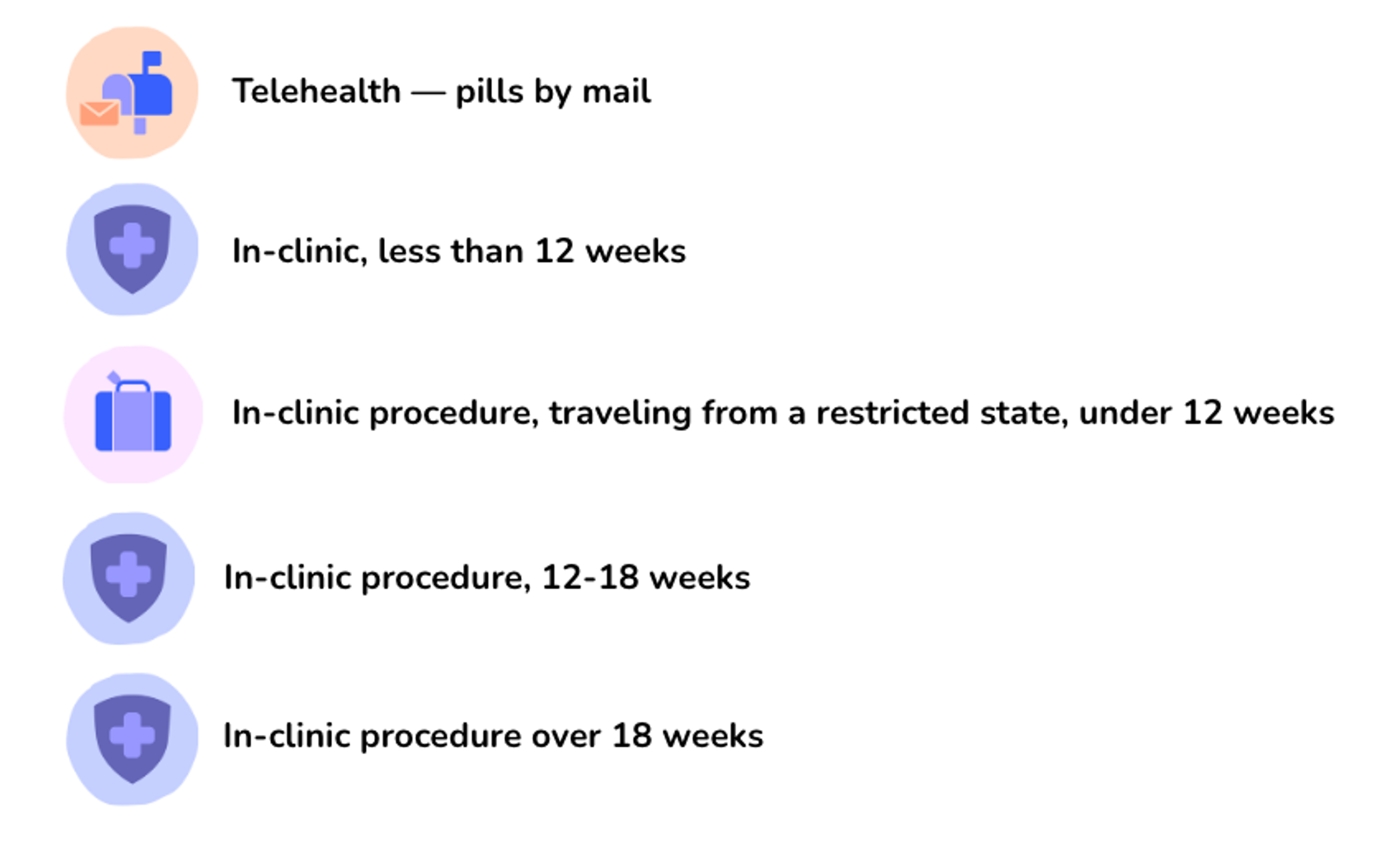
Each scenario includes:
- Baseline costs
- Little explainers for extras like travel (gas or flights), overnight stays, meals, pain management, and post-abortion meds
- Links to organizations that might be able to help cover the costs
- Real stories from people who had abortions — including how much they paid for care, and what they spent on travel
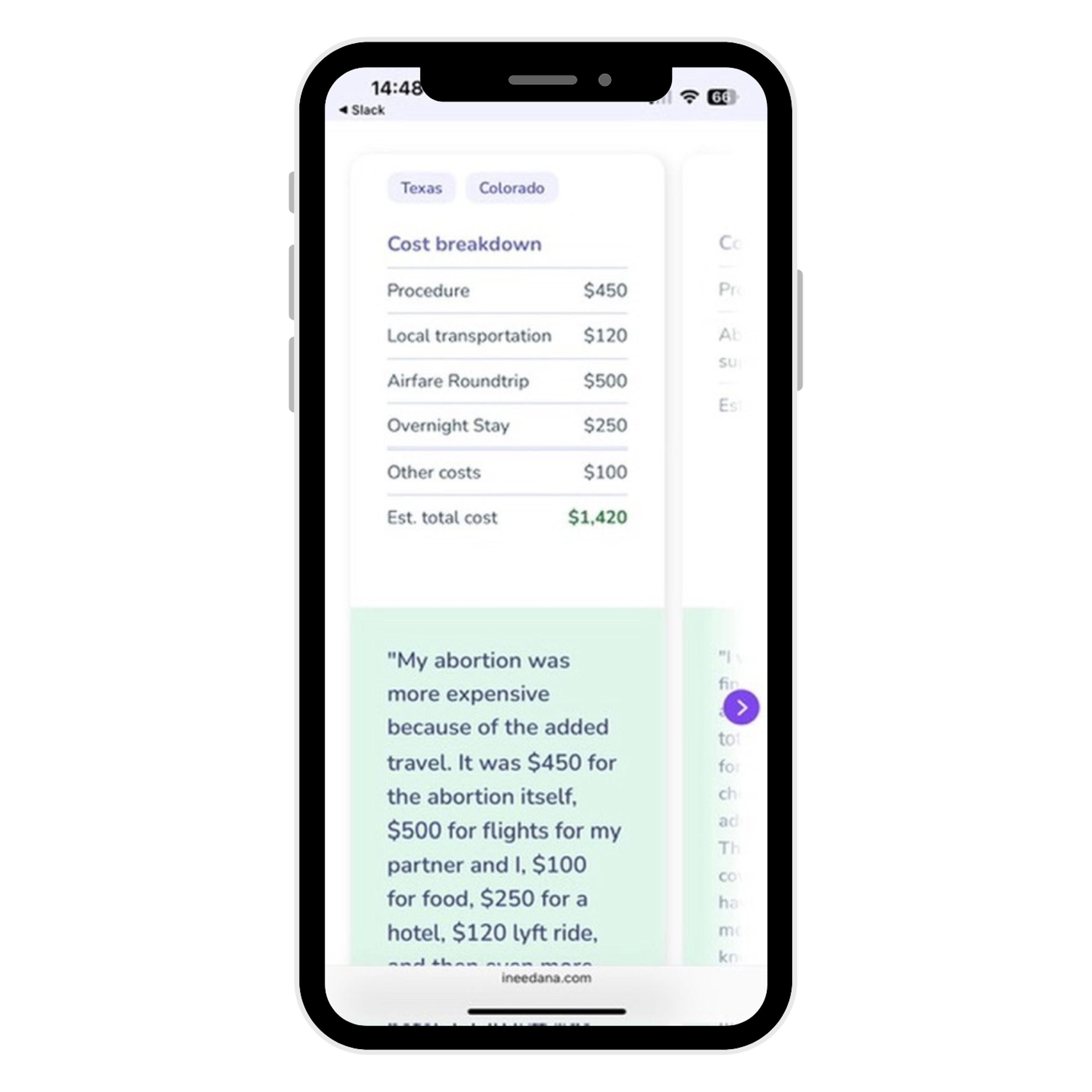
Huge thanks to We Testify and the r/abortion community — we’re grateful to everyone who shared their experience to help others feel more informed.
Want to share the costs of your abortion with our community? Submit it anonymously here.
You can also build a custom estimate based on your unique situation. Add how far you’re traveling, how many nights you’ll need a hotel, meals, and any other costs — then edit everything to match your actual plans. The tool uses the most comprehensive abortion clinic pricing database out there (yep, ours!) to help you prepare before you travel.
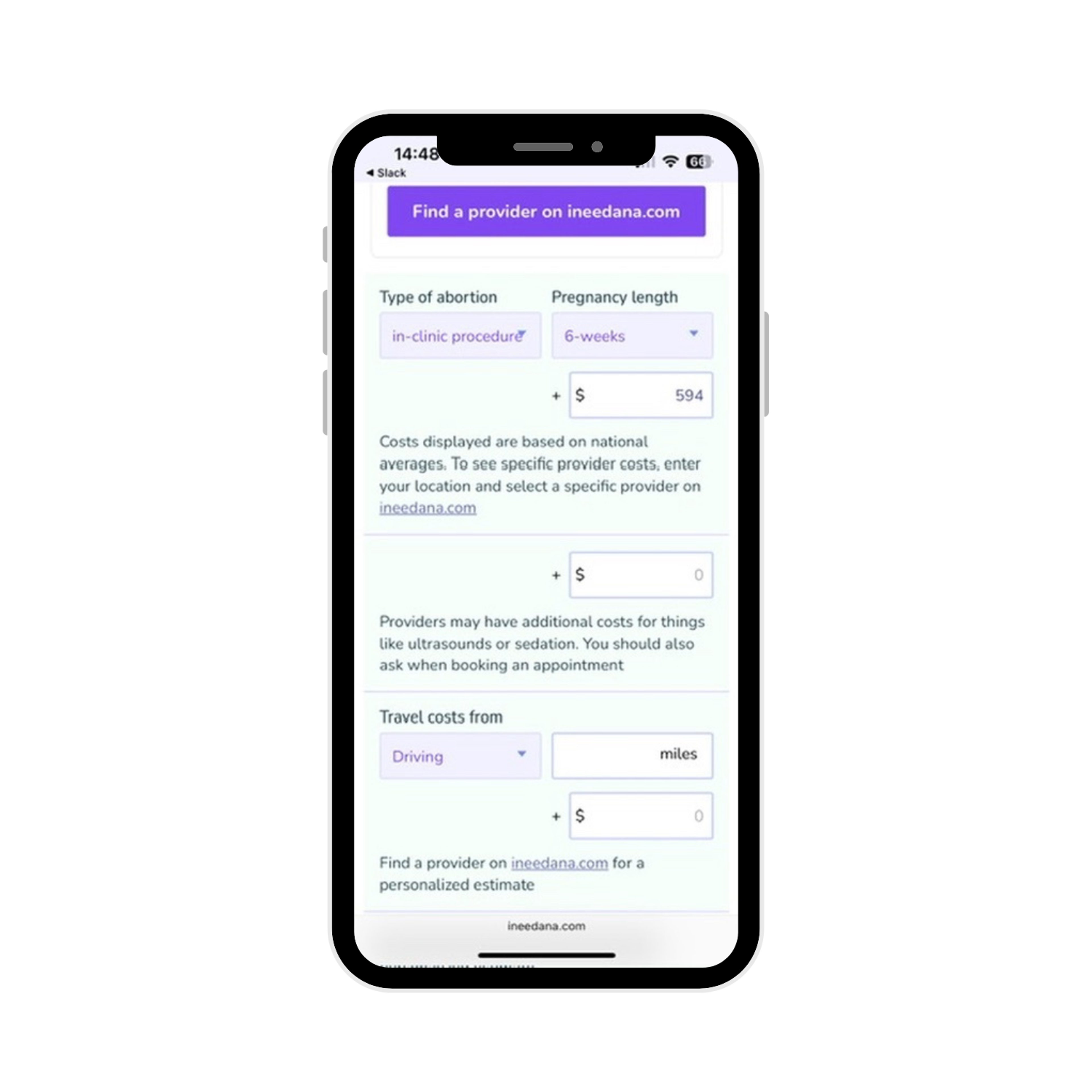
We know navigating abortion access is already hard enough. We hope this helps you get the answers you need, feel more prepared, and know you’re not alone.
Try it out and share it with someone who might need it. 💜
How to get a free abortion in Illinois
Abortion is legal in Illinois and since the Dobbs decision in 2022, the state has introduced a lot of laws to protect abortion access including ways to make it much more affordable.
Private insurance
In 2019, Illinois passed a law called the Reproductive Health Act. This law says that everyone has the right to make their own choices about reproductive health, including abortion. It also means that private health insurance in Illinois must cover abortion just like they cover other types of pregnancy care.
So, if your insurance is regulated by the state of Illinois—like if you or your family got your insurance plan through the Affordable Care Act (ACA) Health Insurance Marketplace or through your employer—and it covers pregnancy care, it must also cover abortion.
But this law doesn’t apply to Medicare, other federal insurance plans, or private employers that use “self-funded” health plans.
Illinois Medicaid abortion coverage
In Illinois, there are two Medicaid programs that must cover both abortion pills and in-clinic abortions:
- Medicaid Presumptive Eligibility (MPE): Gives temporary, same-day coverage for pregnancy-related outpatient care.
- Moms & Babies: Covers care during pregnancy and for 12 months after, no matter how the pregnancy ends—whether by birth, miscarriage, or abortion.
To qualify, you must live in Illinois. Eligibility depends on your income and how many people are in your household. If you're pregnant, Medicaid will count your pregnancy as an extra person in your household. And some clinics can even accept your Medicaid application while it’s still being processed.
Below is a list of abortion clinics and telehealth providers in Illinois that take Illinois Medicaid. If you're eligible, some of them can help you apply for Medicaid during your visit.
People who are undocumented can still get services through Medicaid Presumptive Eligibility (MPE). If you have any trouble because of your immigration status, the Chicago Abortion Fund can help you get care no matter your status.
If you have more questions about immigration and abortion access, check out this article.
People under the age of 18 can also apply for Illinois Medicaid, even if their parents have private insurance. If you’re a minor and need help with applying for Medicaid or need help paying for your abortion, you can call the Chicago Abortion Fund. Be sure to mention this in your voicemail or in the online form.
Additional support
If you aren’t eligible for Illinois Medicaid or if you are traveling to Illinois for abortion care and need support, there are abortion funds that can help!
Chicago Abortion Fund can help pay for your appointment and travel if you’re getting an abortion in Illinois.
Midwest Access Coalition helps with travel, like paying for a place to stay, transportation, food, and childcare if you’re coming to or traveling within Illinois for an abortion.
This article was developed in partnership with the Chicago Abortion Fund. If you know of a provider that should be added to this list or have feedback suggestions for this article, please email team@ineedana.com.
What if my provider gave me a different regimen of misoprostol?
Just like with other kinds of medical care, the doctor, nurse, or midwife prescribing the medication may do things a little differently when it comes to abortion. Some telehealth providers listed on Ineedana.com may use a slightly different misoprostol regimen based on their professional preference. Misoprostol is safe and effective, knowing how it works may help you feel more prepared and informed so let’s get into it.
I was given the combination of mifepristone and misoprostol from a telehealth provider, but the misoprostol instructions are different from what I previously used or read about. What should I do?
Some telehealth providers recommend taking more doses of misoprostol to help ensure the uterus fully empties out. Some people only have a small amount of bleeding after the first set of misoprostol so taking more misoprostol may help people feel more sure the process worked. Taking extra doses of misoprostol is not dangerous and it is safe to follow the instructions that your provider recommends. Misoprostol can have side effects including nausea, vomiting, diarrhea, chills, fever, shaking.
One thing that will always stay the same is when mifepristone is used, it’s always taken as a single pill that’s swallowed 24-48 hours before the misoprostol.
A common regimen that is safe and effective and recommended by the World Health Organization:
- For someone less than 12 weeks from their last menstrual period (LMP) swallow one 200mg mifepristone pill, then 24 hours later let 4 misoprostol tablets (800mcg) sit under the tongue, in the cheek, or in the vagina for 30 minutes.
- For someone between 9-12 weeks from their LMP and has more misoprostol, they should then take 4 more misoprostol the same way 3 hours later. Learn more about the medications and what to expect when someone is over 12 weeks pregnant.
Misoprostol is safe and all of the slightly different regimens from trusted providers listed on Ineedana.com are effective over 90% of the time. Bleeding and passing clots are normal side effects, but it’s a good idea to take all doses of misoprostol your provider recommends even if you start bleeding after the first dose or taking the mifepristone!
Everyone’s body reacts differently to abortion medication—some people bleed more, some less; some pass one large clot, others pass several smaller ones. All of that is normal. It is recommended to take a urine pregnancy test 4-5 weeks after taking the medication to make sure it’s negative.
- Learn more about what to expect and how to know if the pills worked.
- Miscarriages and medication abortions look the same, learn about what's normal and what’s a potential emergency.

Have more questions?
Call, text, or Signal message Reprocare at (833) 226-7821.
Call or text the Miscarriage + Abortion Hotline at (833) 246-2632 to talk to a clinician.
Get the Aya Contigo app and talk with an expert.
What Parents Should Know About CPS and Abortion Access
If you’ve been or are being investigated or arrested for an abortion or pregnancy loss, contact the Repro Legal Helpline at 844-868-2812 immediately to talk to a lawyer about your legal rights and potential risk.
If you’re a parent considering an abortion, you may be wondering if that choice could put you at risk of a Child Protective Services (CPS) investigation. I Need An A and If/When/How want you to know that many parents decide to have an abortion because it is the best decision for them and their family. We want you to have all the information you need to feel supported, no matter what you decide to do.
Can CPS get involved if I have an abortion?
Having an abortion—whether at a clinic or self managing with pills—is not a reason to be reported to CPS. It is not a crime. But, in rare cases, especially when someone self manages or goes to the emergency room afterward, abortion has led to CPS involvement.
Let's be clear - healthcare providers do not have to report someone to the police or CPS for having an abortion, including a self-managed abortion. But what the law says and what happens in real life can be different.

Here are some ways CPS involvement can happen due to an abortion:
🚩 If a parent is reported to the police for self-managing their abortion, research shows that CPS will be called.
🚩 If a healthcare provider or clinic staff believe they need to make a call based on something shared during an appointment.
Healthcare providers and clinic staff are mandated reporters. This means they are legally required to report suspected child abuse or neglect. What is considered child abuse and neglect depends on the laws in each state. Though unlikely, this means there is a chance they might report you to CPS. The risk is higher if you talk about:
- struggling with housing, food or other basic needs
- Mental health or disability
- Drug use during pregnancy
🚩 People experiencing intimate partner violence can face a higher risk of being reported to CPS.
Sometimes, the abusive partner can make the report. Other times, hospital staff report that there are kids at home because they may believe the violence is putting your child at risk or that calling CPS will help get you resources to leave. But CPS getting involved often causes more harm than help.
If you are experiencing intimate partner violence and need help, call or chat with the National Domestic Violence Hotline.
🚩 If the person getting the abortion is a minor, particularly if they’re under 15 and going to a clinic.
Every state has statutory rape laws. These laws say people can only consent to sex after a certain age, no matter the age of the other person. Healthcare providers, including clinic workers, are mandated reporters and may be required to ask about how your teenager got pregnant. You or your teen don’t have to share any information about the other person involved if you’re not comfortable.
💜 We also know there is also a higher risk for CPS getting involved with people who are already being surveilled by the state. Like our criminal legal and immigration systems, the family policing system is rooted in racism that punishes Black, Indigenous, and other families of color, immigrant families, people living in poverty, and people with disabilities.
What rights do I have as a parent when CPS is involved?
If you’ve been or are being investigated or arrested for an abortion or pregnancy loss, and you have children, contact the Repro Legal Helpline at 844-868-2812 immediately to talk to a lawyer about your legal rights and potential risk.
You do not have to share any information to CPS about your abortion and/or medical history that you don’t want to share.
Do not sign any paperwork (“release” or “HIPAA form”) without talking to a lawyer first. You can tell them that this is private medical information that is protected by HIPAA and you don’t want to speak about it without talking to your lawyer first. If CPS contacts you and is asking you questions about your abortion, you can contact the Repro Legal Helpline at 844-868-2812.
You do not have to speak to CPS if you do not want to.
You also do not have to let them into your home without a warrant or court order signed by a judge. But that does not mean the investigation will stop or the case will end.
CPS may contact other people in your and your children’s lives, like family, neighbors, or teachers, for more information. They might also decide to get a court order saying that you must meet with them or let them see your children. Everyone’s situation is different, and only you know what is best for you and your family.
You do not have to let CPS talk to your child(ren).
If they are old enough to speak, CPS will probably try to talk to them alone. CPS may do this when they first come to your home, or they may go to their school. You can tell the school that you do not want CPS talking to your children without you. Or that they notify you if CPS contacts the school. But many schools have agreements with CPS that they will let CPS interview children at school without a parent. CPS may also decide to bring you to court so they can get an order from a judge that lets them talk to your child(ren) without your permission.
If you decide to talk to CPS, remember that everything you say and do will be documented by CPS and can be used against you in court later.
That means how you say something can be just as important as what you say to CPS. If CPS believes you’re being rude or defensive, that can impact their decision making in your case. Try to stay as calm as possible when talking to CPS.
Abortions are safe and common—and you shouldn’t have to fear legal consequences or losing your children because of decisions about your body and your family. We hope this article helped you feel more prepared and supported. You always have options, and you’re never alone.
Find your abortion options at ineedana.com, and get your legal questions answered by the Repro Legal Helpline 💜

How can I reduce my risk?
Be mindful of who you talk to about your abortion and how you communicate about it.
You do NOT have to tell anyone about your abortion.
- If you’re worried about going to the emergency room or hospital after an abortion or miscarriage, read this article.
- To learn about your rights when talking to any healthcare provider about your abortion or miscarriage, read this article.
- Learn more about how to keep your information private.
- To learn more about how immigration status can affect abortion access, read here.
Find free legal, medical and emotional support.
- Repro Legal Helpline: get all of your legal questions answered, including questions about CPS.
- M+A Hotline: get your medical questions answered by a volunteer doctor.
- Reprocare: Peer support hotline for people using abortion pills.
- Aya Contigo: A digital companion for sexual and reproductive health care with a live chat.
FAQ
Abortions are safe and common—and you shouldn’t have to fear legal consequences or losing your children because of decisions about your body and your family. We hope this article helped you feel more prepared and supported. You always have options, and you’re never alone.
Find your abortion options at ineedana.com, and get your legal questions answered by the Repro Legal Helpline 💜 Want to hear from people who were already parents? Check out this collection of their stories.
Do you need RhoGAM after an abortion or miscarriage?
Maybe! It really depends on a few things:
- If you have a negative blood type
- If you’re having an abortion or miscarriage after 12 weeks of pregnancy
- If you want to have children in the future
If you answered YES to all of the above, it is recommended to get an injection called Rh-immunoglobulin (commonly known as brand name RhoGAM).

What is RhoGAM and why is it so important?
(Here’s where it gets a little medical—read on if you're curious, or you can skip to the part how to find out if you're Rh-negative.)
If your blood type is Rh-negative and you're pregnant with a fetus who has an Rh-positive blood type, this is called Rh incompatibility. When this happens, there’s a chance for something called Rh sensitization.
Rh sensitization means that if Rh-positive blood from the fetus mixes with your Rh-negative blood, your body can have an immune reaction by creating antibodies that may attack Rh-positive blood cells and cause harm to a future desired pregnancy.
When someone with Rh-negative blood is exposed to Rh-positive blood, their immune system can become “sensitized.” That means it starts making antibodies against the Rh-positive blood, treating it like an invader and trying to destroy it.
This immune response usually doesn’t cause problems during the first pregnancy because the pregnant person’s blood usually doesn’t mix with the fetus’s blood until delivery, therefore antibodies don’t form until after delivery. But in future pregnancies, if the fetus has Rh-positive blood, those antibodies could attack the fetus’s red blood cells leading to a condition called hemolytic disease of the newborn (HDN) or miscarriage.
During routine prenatal care pregnant people with Rh-negative blood types will receive an injection from their provider called RhoGAM to stop these antibodies from forming. This injection is given around 28 weeks of pregnancy and then again within 72 hours after the delivery to make sure future pregnancies are safe.
For people having an abortion or miscarriage and who plan to have kids in the future, the RhoGAM shot will protect those future pregnancies. New research shows that if you’re under 12 weeks, there's no reason to get RhoGAM before or after taking the pills or having an abortion procedure, since there's no evidence that Rh sensitization can occur this early in pregnancy. After 12 weeks, however, the pregnant person should get a RhoGAM shot within 3 days of taking mifepristone or misoprostol or within 3 days of having an abortion procedure to help avoid Rh sensitization in the future.

How can I find out if I’m Rh negative?
If you’ve given birth before, had a blood transfusion or donated blood you may already know this! Your blood type doesn’t change so it's not something that needs to be done over and over again.
If you don’t already know your Rh status before your appointment, that is ok. For people above 12 weeks pregnant you will be able to have a blood test to find out your Rh status during your appointment. If you would like to know your Rh status before your appointment there are a few options:
- Ask your parents or your doctor, they may already know!
- Next time you get your blood drawn you can ask if they will check your Rh status
- At-home blood test or self-order lab visit
- Blood donation
If you know your Rh status or are planning to bring a copy of your blood work results with you to your abortion appointment, just verify before your appointment that they will accept self-reported results or results from elsewhere.

Do I need to know my blood type before traveling to my appointment?
You only need RhoGAM if you’re Rh-negative and over 12 weeks pregnant. If you would like to try to find out your Rh status before you travel to your appointment you can use one of the options discussed above. If that is not possible when you arrive at your appointment your Rh status will be checked or you may be offered RhoGAM even if you don’t know your blood type as it is generally not dangerous to receive RhoGAM if you are Rh positive.
Does the doctor need to know my partner’s blood type?
If you are Rh negative and 100% certain your partner is also Rh negative, then the pregnancy’s blood type would also be negative and there’s no need for the RhoGAM injection.
How soon after an abortion or miscarriage should I get a RhoGAM shot?
Within 3 days of taking mifepristone or misoprostol or within 3 days of having an abortion procedure or miscarriage. But, if you aren’t able to get RhoGAM within 3 days of recommended time, talk to a medical provider. Or call or text the Miscarriage and Abortion Hotline at (833) 246-2632

I’m having an abortion or miscarriage at home, how do I get RhoGAM?
If you're under 12 weeks pregnant (that's 11 weeks and 6 days or less to be exact), you do not need it.
If you’re over 12 weeks pregnant some options include calling your obgyn, midwife, primary care provider or going to the ER. You do not need to say that you had an abortion, some people say they had miscarriage and need the RhoGAM shot. Remember it’s recommended to get the shot within 3 days of the abortion or miscarriage.
It’s also not harmful to get a RhoGAM injection if you’re unable to get a blood test or are unsure what your blood type is.

Have questions before, during or after an abortion?
Reach out to the Miscarriage and Abortion Hotline to talk with a volunteer doctor. Call or text (833) 246-2632